
The 2026 US SGRT Community Meeting — “A Whole New World of SGRT” — brought together clinicians, physicists, and radiation therapists from across the country for two days of clinical insight and peer-to-peer learning in Orlando, Florida.
Presentations spanned the full radiation oncology workflow — from simulation and planning through to treatment delivery and real-time dose visualization — reflecting how far SGRT has come as a clinical standard of care. Topics included tattoo-free and open-faced mask workflows, surface-guided proton therapy, non-coplanar planning, dose visualization with DoseRT, and practical implementation experiences from community and academic centers alike.
As always, the meeting provided a vibrant space for honest clinical sharing and collaboration — and with each year, the SGRT community continues to raise the bar for what’s possible in patient care.
Day 1
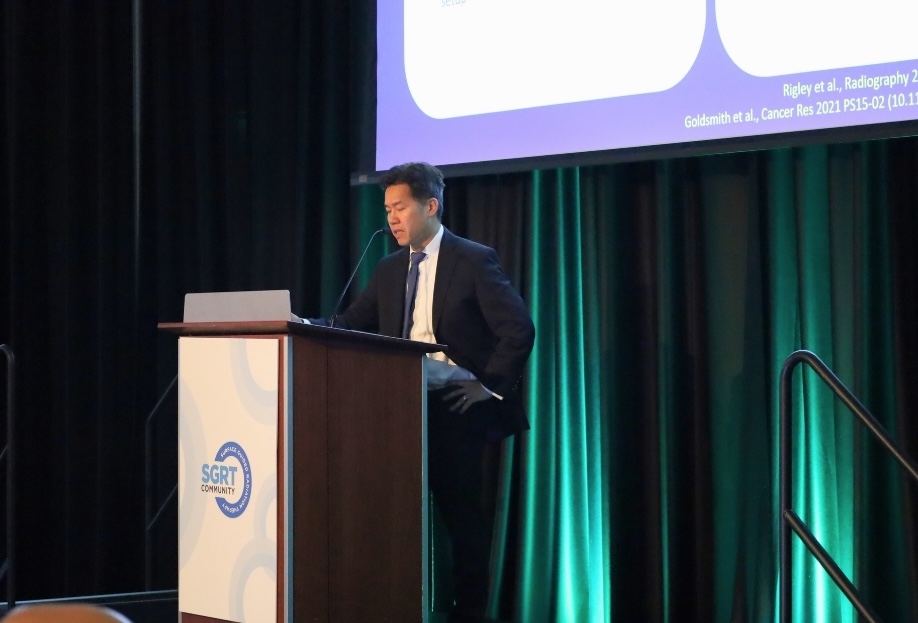
Patient Experience with Tattoo-Less Setup and Open-Face Masks
L. Andy Chen, MD, PhD
Radiation Oncologist
Texas Oncology – Houston Medical Center & Sugar Land Cancer Center, USA
Radiation Oncologist Dr. Andy Chen made a compelling case that patient experience isn’t a “soft” outcome — it’s directly tied to treatment quality. Drawing on published evidence and Texas Oncology’s own clinical experience, he outlined how SGRT is transforming care across three key areas.
Tattoo-free setup with AlignRT removes a genuine psychological burden. Studies show permanent marks cause lasting distress around body image and daily life — and SGRT-guided tattoo-free workflows match or even improve setup accuracy compared to traditional skin marks.
Postural Video has proven to be a significant efficiency gain, reducing setup time and re-image rates while cutting the time patients spend in uncomfortable positions — a win for both patients and throughput.
For head and neck patients, open-faced masks are strongly preferred, with discomfort scores significantly lower than closed masks. SGRT provides the continuous intrafraction monitoring needed to make this clinically safe, with mean deviations under 0.4mm.
The message was clear: when SGRT is implemented thoughtfully, it elevates both the patient experience and the quality of treatment delivery.
Validation, Commissioning and Early Clinical Results for Beam Guide – a Tool for Radiation Dose Visualization
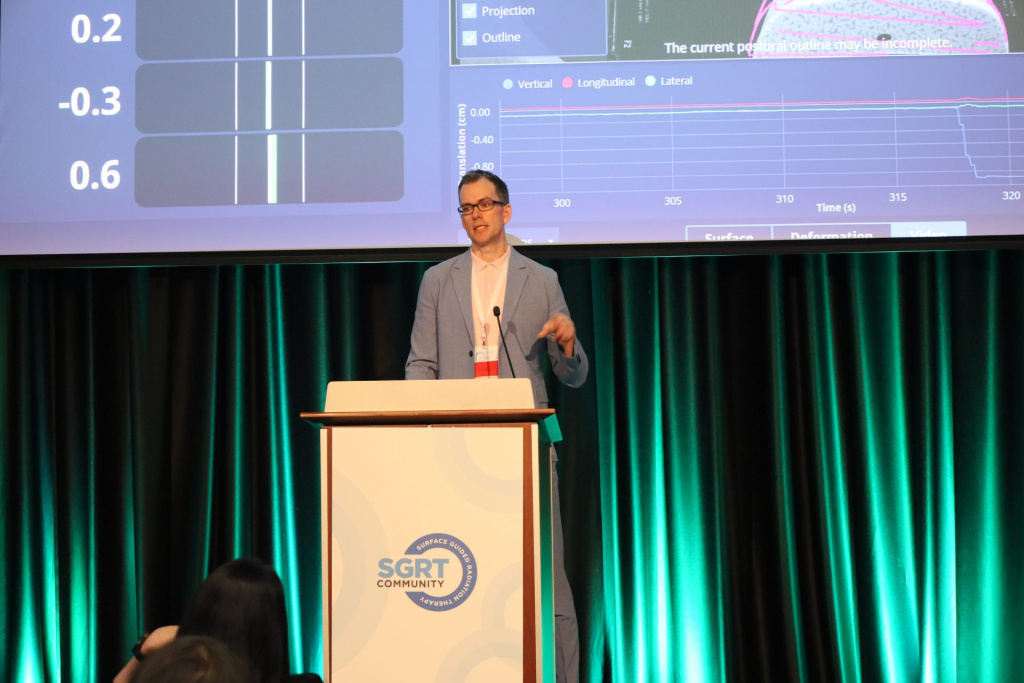
Josh Naylor, MSc, MPE
Principal Radiotherapy Physicist
University Hospitals Dorset, UK
Josh Naylor from University Hospitals Dorset presented validation and early clinical results for Beam Guide — one of the most recent developments in SGRT.
Beam Guide projects a real-time visualization of the planned radiation field directly onto the patient during setup, giving therapists a complete picture of both patient positioning and beam delivery before treatment begins.
Tested across 20-30 breast patients using a range of techniques, the clinical benefits were clear. Beam Guide reassured teams that the dose was not being delivered to unintended areas, and proved particularly valuable for breath-hold verification. Two case studies stood out: an arm position error detected before treatment, and stray exit dose to the chin identified and corrected.
When combined with DoseRT, Beam Guide completes the picture — from setup confidence to real-time dose visualization during delivery.
Successful SGRT Implementation
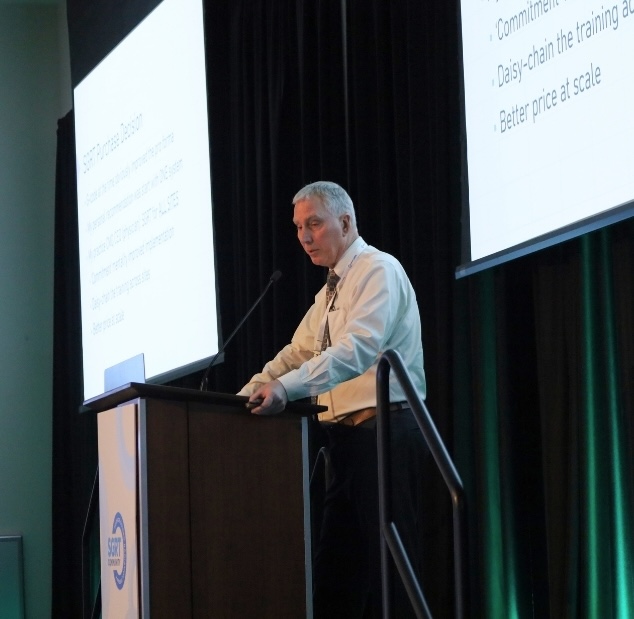
Scott Tannehill, MD
Arizona Center for Cancer Care, USA
Dr. Scott Tannehill from Arizona Center for Cancer Care shared a candid and practical account of implementing SGRT across free-standing clinics.
The most important implementation lessons? Introducing an RTT champion greatly influenced new adoption and the decision to go all in, rolling out across all sites simultaneously, rather than piloting, made for a much smoother transition.
Clinically, the results speak for themselves. Arizona Center for Cancer Care has eliminated tattoos and skin marks for most patients, integrated Postural Video across all photon treatments, and is actively evaluating SGRT as a partial replacement for IGRT in selected cases — reducing imaging frequency while maintaining confidence in patient positioning.
Day 2
SGRT through the Entire Radiation Workflow
Anton Eagle, MS, DABR
Senior Medical Physicist
AdventHealth Parker, USA
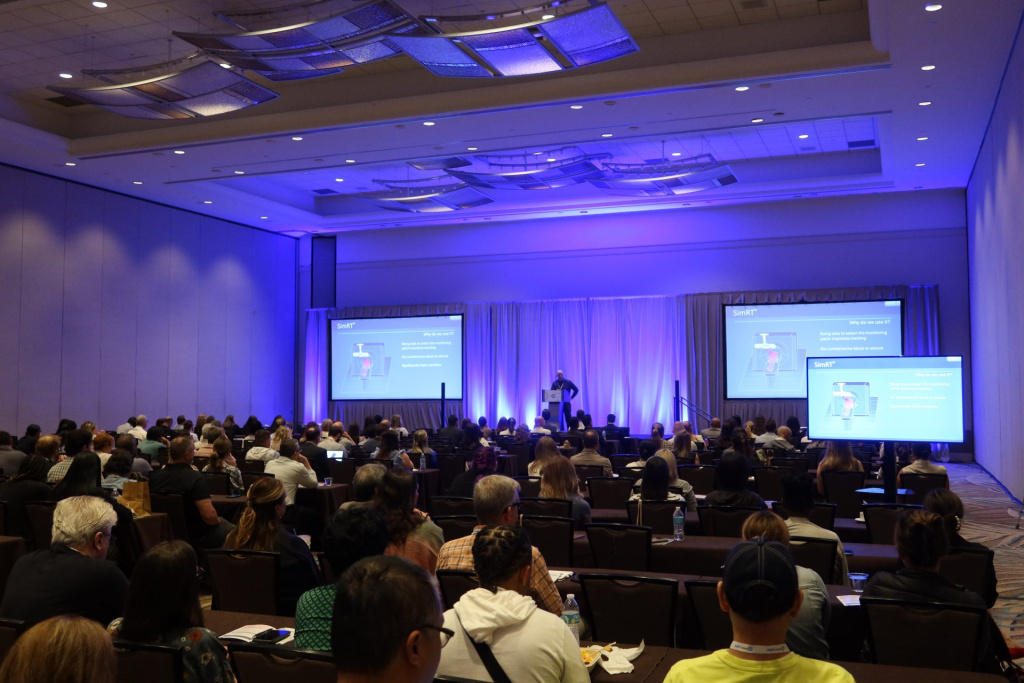
Senior Medical Physicist Anton Eagle from AdventHealth Parker gave a comprehensive tour of how SGRT can be embedded at every stage of the radiation oncology workflow, from simulation through to dose verification.
Anton demonstrated how full-body surface mapping and collision modeling can close the traditional “planning gap” between simulation and treatment, enabling more confident non-coplanar planning and improved workflow efficiency. He also shared automation gains with Auto ROI, reducing contouring time from ~95–100 seconds manually to as little as 8–10 seconds while maintaining clinically equivalent contours. A standout message focused on Cherenkov-based DoseRT imaging, where research indicates that approximately 10% of patients have errors in their treatment that can be detected by Cherenkov imaging.
Treatment Accuracy with DIBH and SGRT: A Local Quality Improvement Initiative to Enhance Workflow, Safety, and Efficiency
Natasha Calle, RT(T)
Lead Radiation Therapist
Florida Cancer Specialists, USA
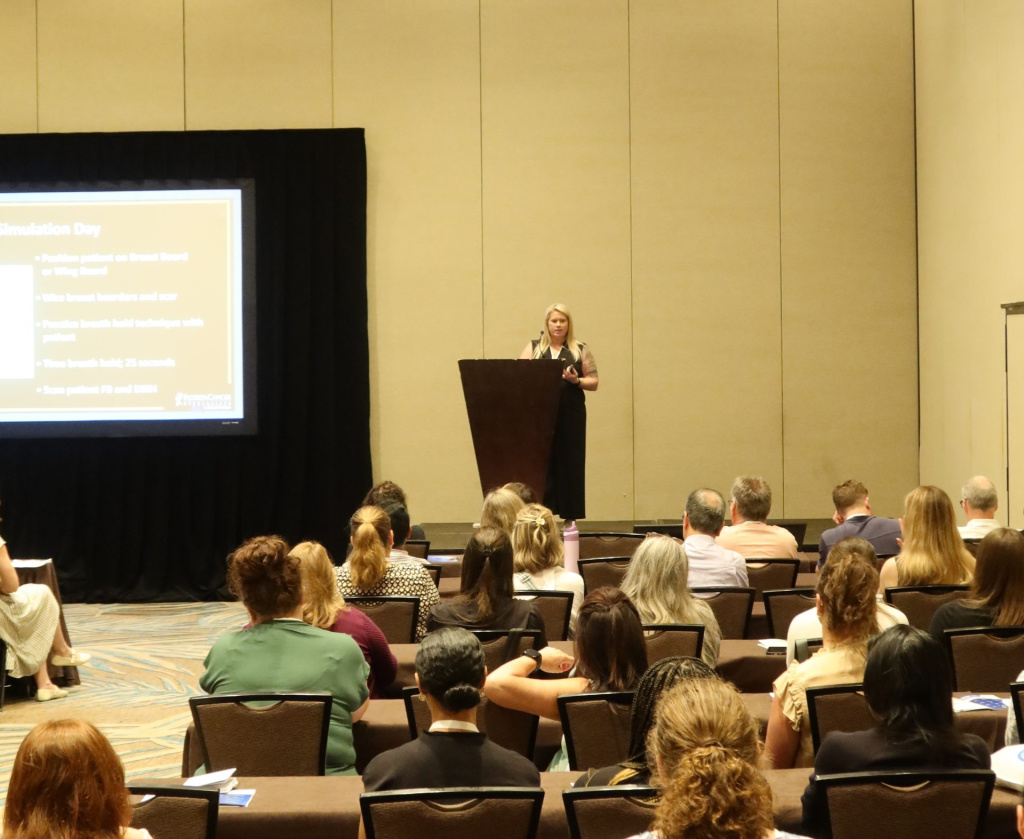
Natasha Calle shared how Florida Cancer Specialists standardized DIBH and SGRT workflows to improve efficiency, safety, and treatment accuracy in breast radiotherapy. Since implementing AlignRT in 2023, the team has achieved “tattooless” workflows across 12 clinics, with DIBH utilization reaching 97% for left breast patients and 94% overall in 2025.
Natasha highlighted measurable dosimetric improvements with DIBH, including reducing mean heart dose in left breast treatments from 95.7 cGy in free breathing to 59.5 cGy with DIBH, while also lowering lung dose. The initiative also shortened treatment times, reduced imaging frequency in line with ALARA principles, and improved patient throughput.
“Make it easy — copy and paste,” Natasha noted while outlining the clinic’s streamlined five-step workflow for daily setup and treatment.
Implementing Dose Visulization to Help Improve Patient Safety
Neil Worlikar, MS, DABR
Director of Medical Physics
Advocate Health – Midwest Region, USA
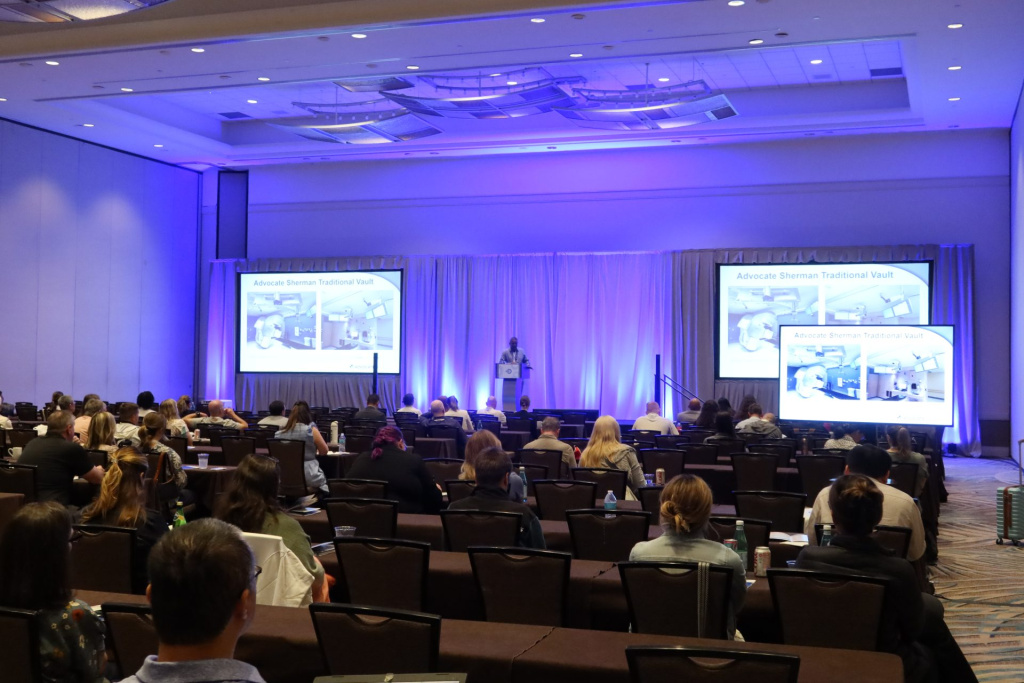
Neil Worlikar shared practical lessons from implementing DoseRT dose visualization technology across multiple clinical sites to enhance patient safety and treatment verification.
“This technology changes the way we evaluate plans.”
Clinically, DoseRT has already influenced breast treatment workflows by helping therapists identify potential dose to the chin, neck, or contralateral breast, verify bolus placement, and improve low-dose isodose review during planning.
Presentation Winner
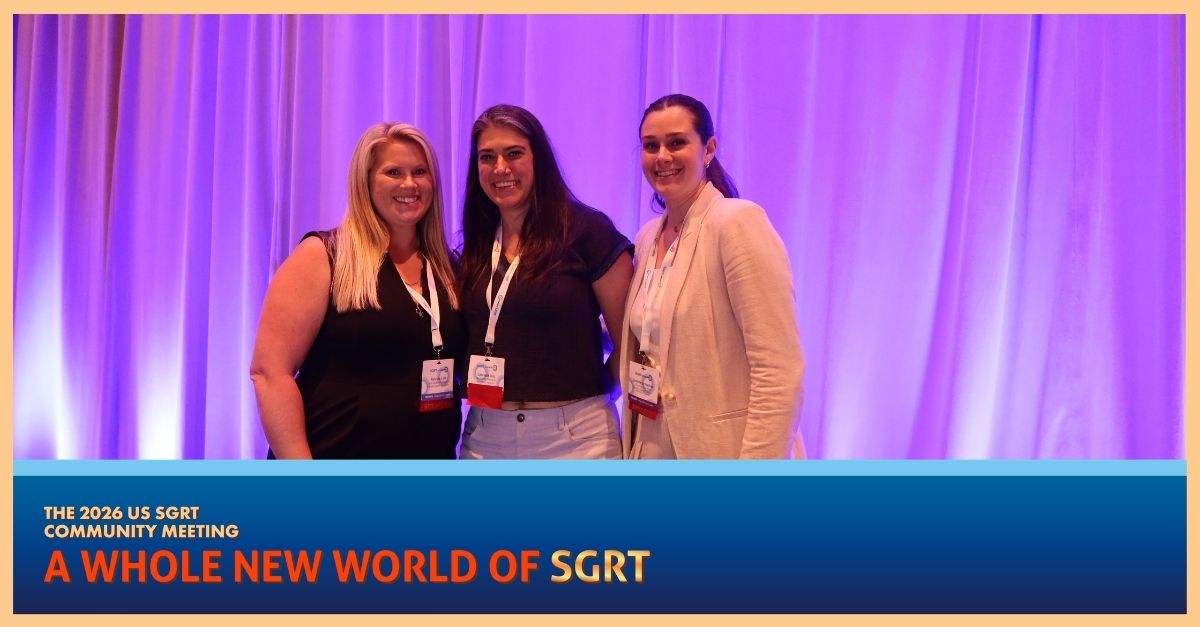
Huge congratulations to Natasha Calle from Florida Cancer Specialists & Research Institute and Gabrielle Aris and Danielle Lemachko from Stamford Hospital — winners of the Best Presentation Award!
Thank you to all our speakers for helping create an unforgettable peer-to-peer event.
Listed below are PDF copies of presentations: